Vanilla Cake Recipe
The classics are classic for a reason. While there are hundreds of recipes for a “moist vanilla cake,” there really is only one way to make the perfect texture and taste: it’s using the reverse creaming method. Reverse Creaming is where you add the butter to dry ingredients first instead of the wet ingredients. This prevents large holes in the cake batter, and gives the cake a balanced moist crumb, with a divine buttery taste. Pairing with high-quality butter, vanilla extract, and whole eggs round out the essentials that make this recipe truly delicious. Use my Classic Vanilla Buttercream Recipe to create a combo that’s not too sweet, and oh so vanilla-y.
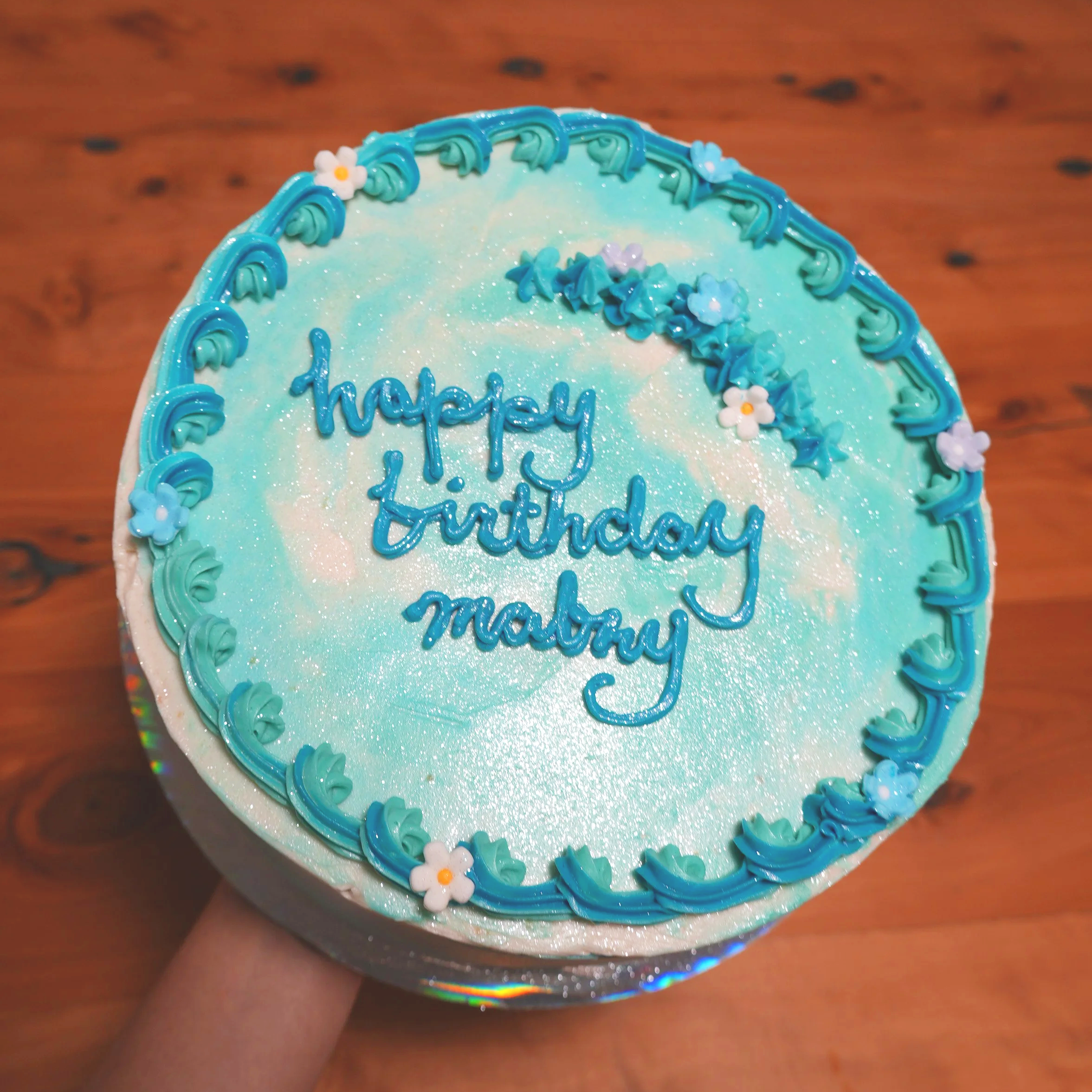
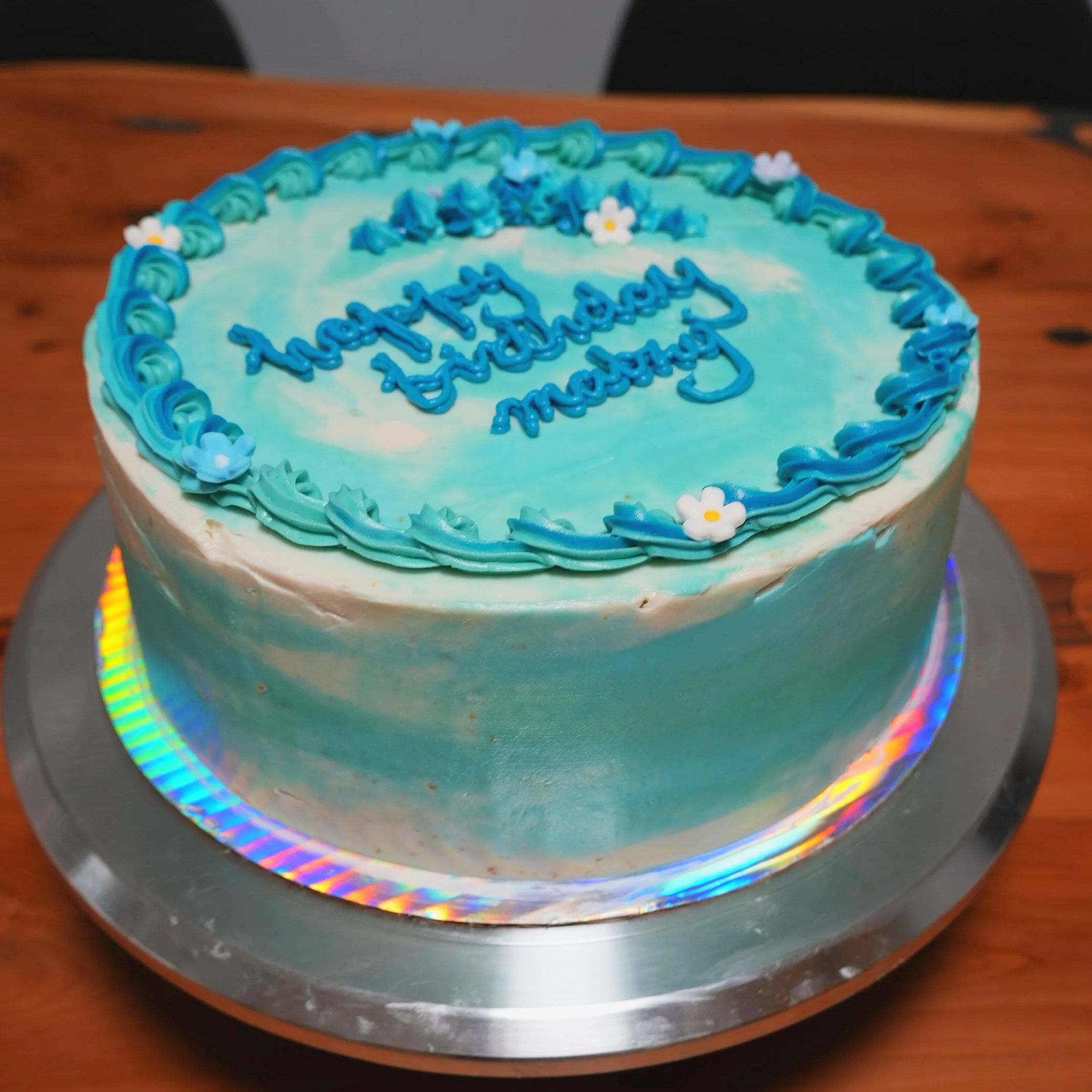
The perfect Vanilla Cake Recipe with Classic Vanilla Buttercream Recipe
Some quick tips: Make sure your Baking Powder and Baking Soda are fresh. These leavening agents tend to go bad after opening and will not allow your cake to rise fully if they are past their ideal chemical state.
Cake Flour is used in this recipe which has a different protein compound than regular, all-purpose flour. You cannot swap for all-purpose flour.
Some ingredients (milk, eggs, and butter) need to be brought to room temperature before combining. Plan accordingly.
This recipe is modified for high altitude baking. Take note of adjustments to leavening, sugar, and oven temperatures if baking this recipe closer to sea level.
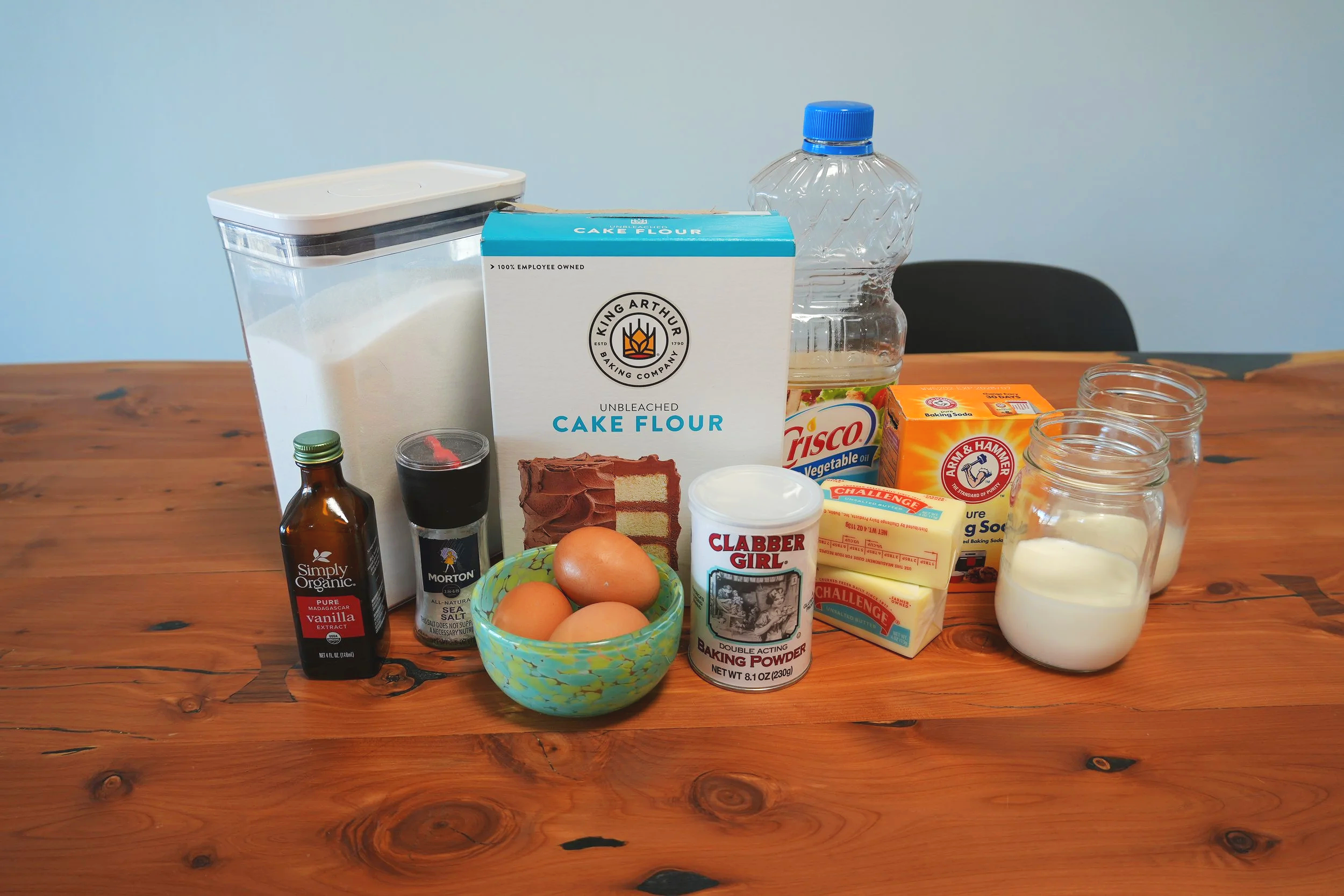
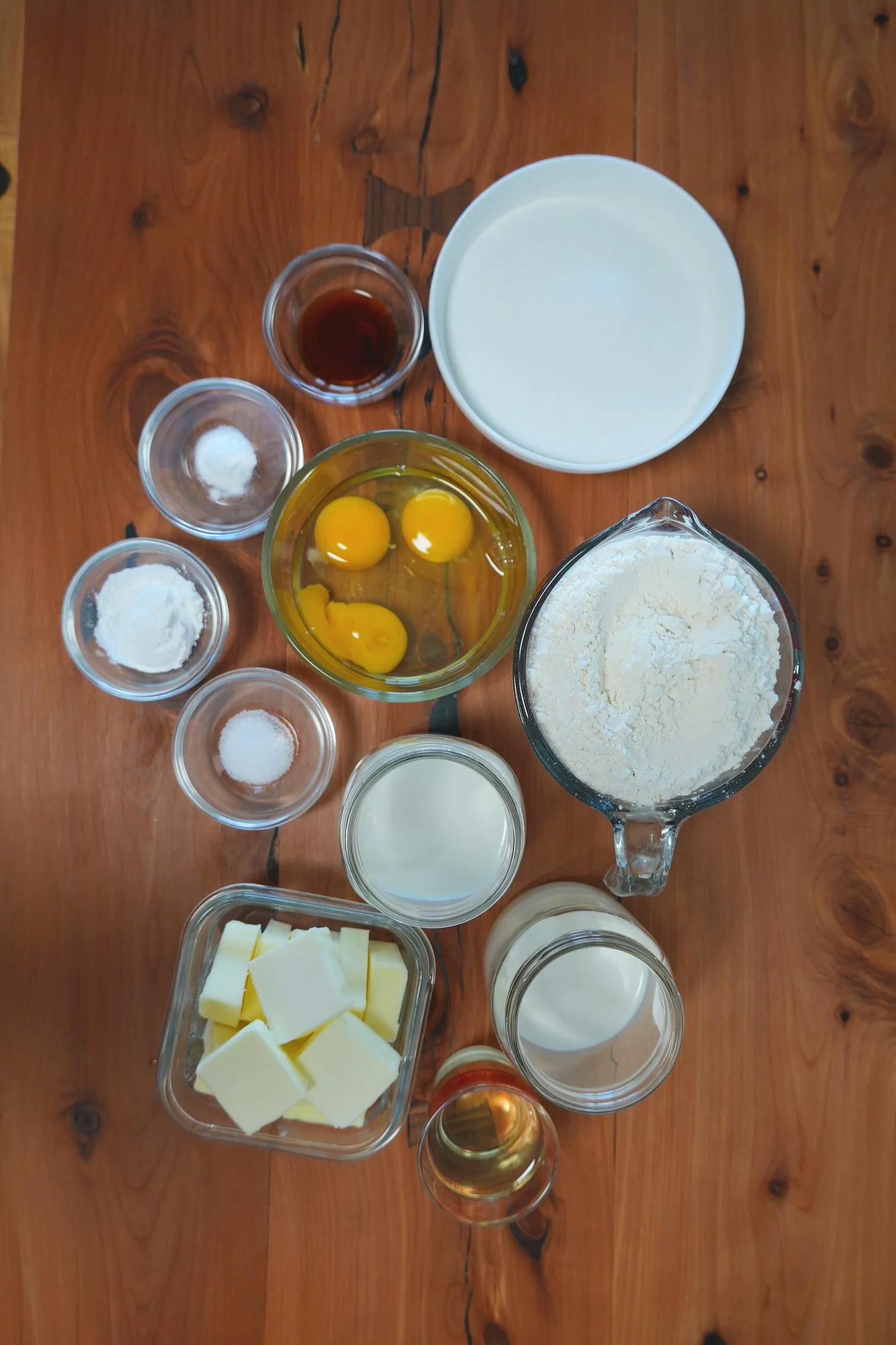
Equipment:
3 deep 8” Cake Pans
3 Cake Strips
Parchment Paper
Stand Mixer or Hand Mixer fitted with Whisk Attachment
Mixing Bowl
Measuring Spoons and Cups
Measuring Scale
Rubber Spatula
Oven Thermometer
Plastic Wrap
Ingredients:
10 fluid ounces Whole Milk (room temperature)
3 fluid ounces Vegetable or Canola Oil
3 Large Eggs (room temperature)
13 ounces Cake Flour - not to be confused with regular flour
12.8 ounces Granulated Cane Sugar - check the back of the ingredients and ensure it says “Cane Sugar” or “Pure Cane Sugar,” otherwise the sugar comes from beats and that will not be what we want. This measurement is optimized for 4500ft altitude. If you’re baking closer to sea level, use 13 ounces.
2 and 3/4 teaspoons Baking Powder (adjusted for 4500ft altitude, if you’re closer to sea level, use 3 teaspoons)
1/4 teaspoon Baking Soda - check for freshness
1/2 teaspoon Kosher Salt
8 ounces European Style Unsalted Butter (room temperature) cut into chunks - I use Darigold, Challenge, or Kerrygold brands
Non-stick Baking Spray with Flour - I use Baker’s Joy brand
Directions:
Step 1: Preheat your oven to 325°F (at 4500ft altitude, if you’re closer to sea level set it for 335°F), then line the bottom of your cake pans with parchment paper, spray with non-stick baking spray and set aside.
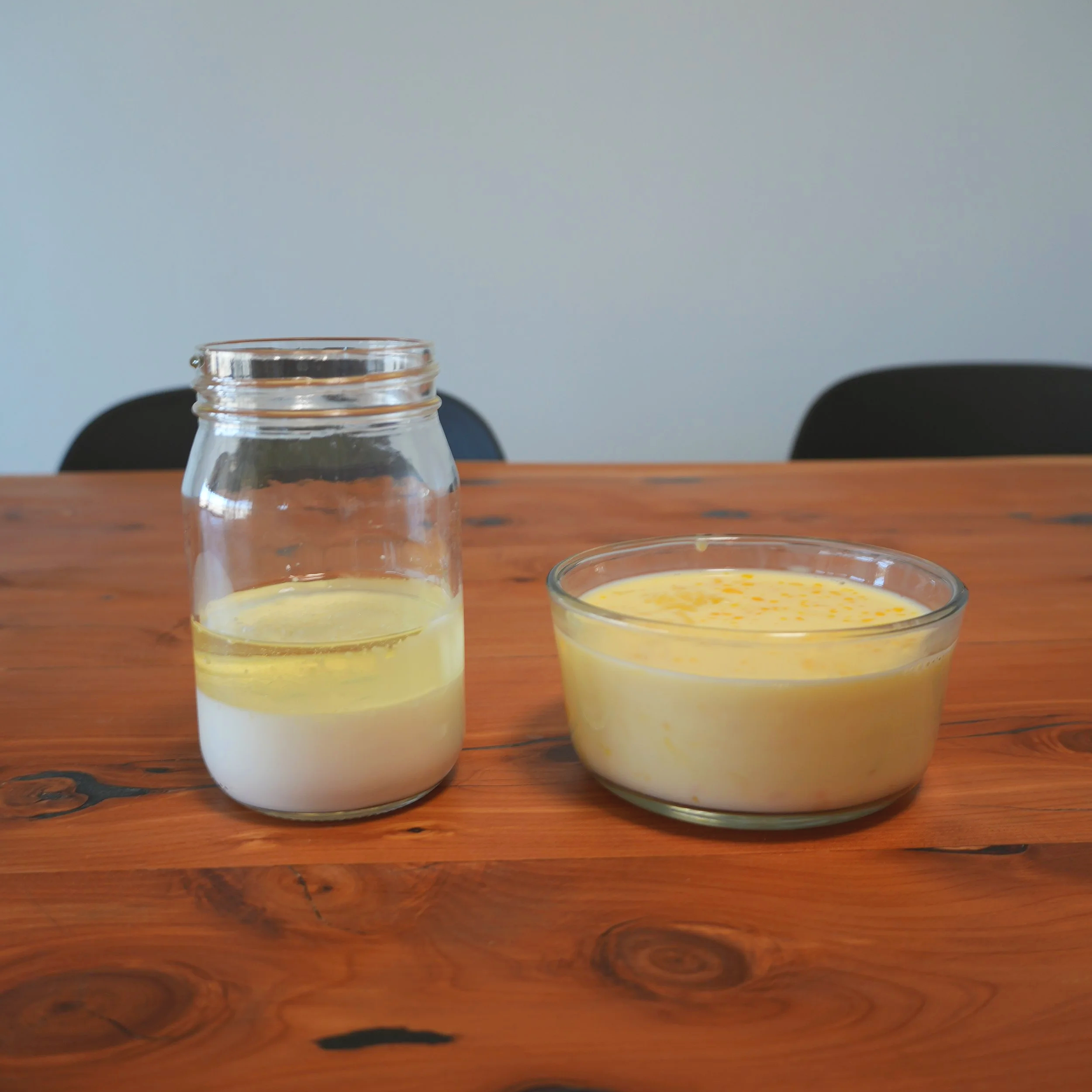
Step 2: Separate your Whole Milk into 2 small bowls of 6 fluid ounces and 4 fluid ounces. Add the 3 fluid ounces of Vegetable/Canola Oil into the 4 fluid ounces of Milk and set aside (do not mix), and add the 3 Large Eggs into the 6 fluid ounces of Milk and whisk enough to break up eggs then set aside.
Step 3: Combine the Cake Flour, Sugar, Baking Powder, Baking Soda, and Salt into the bowl of your stand mixer and turn on slow speed to mix well.
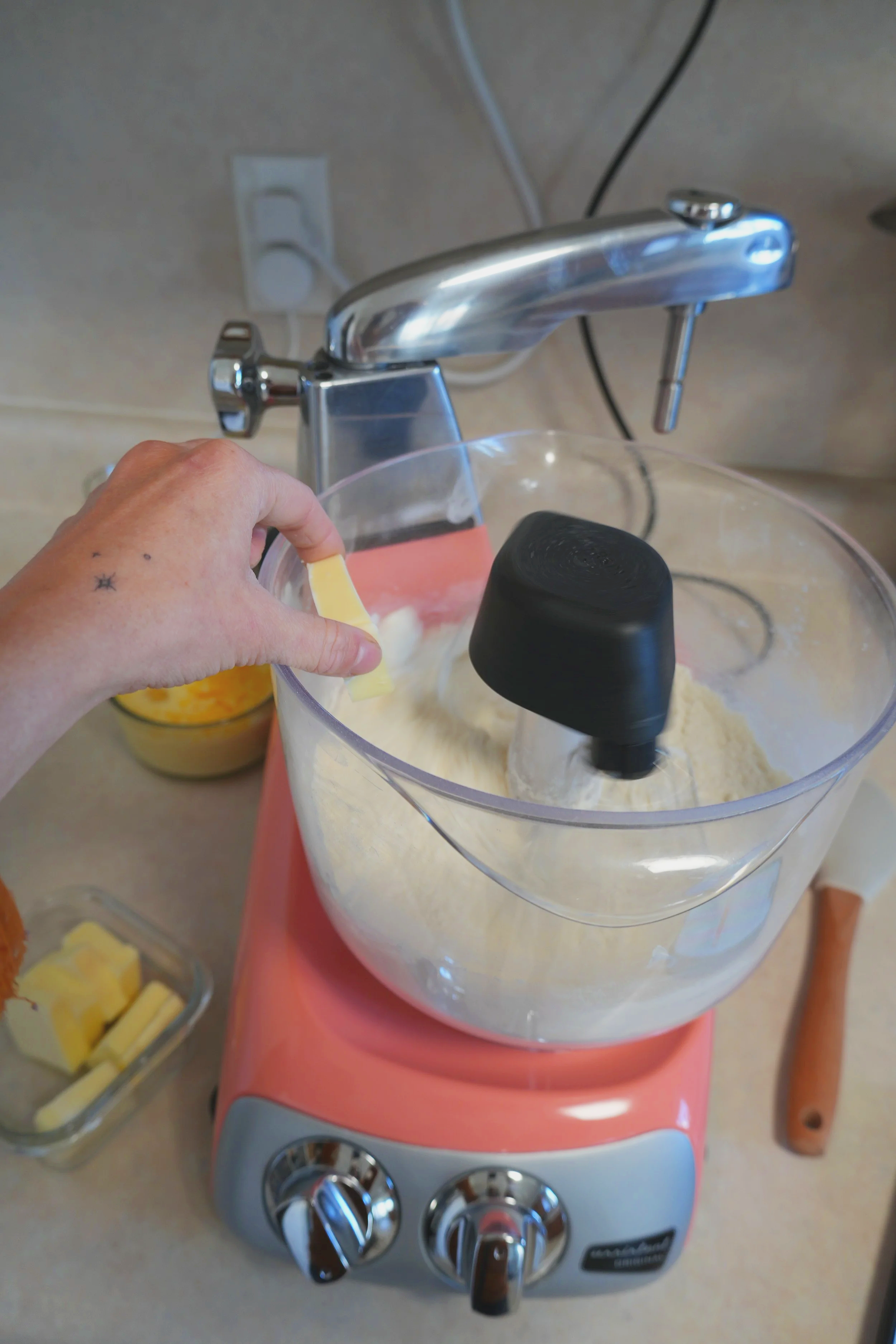
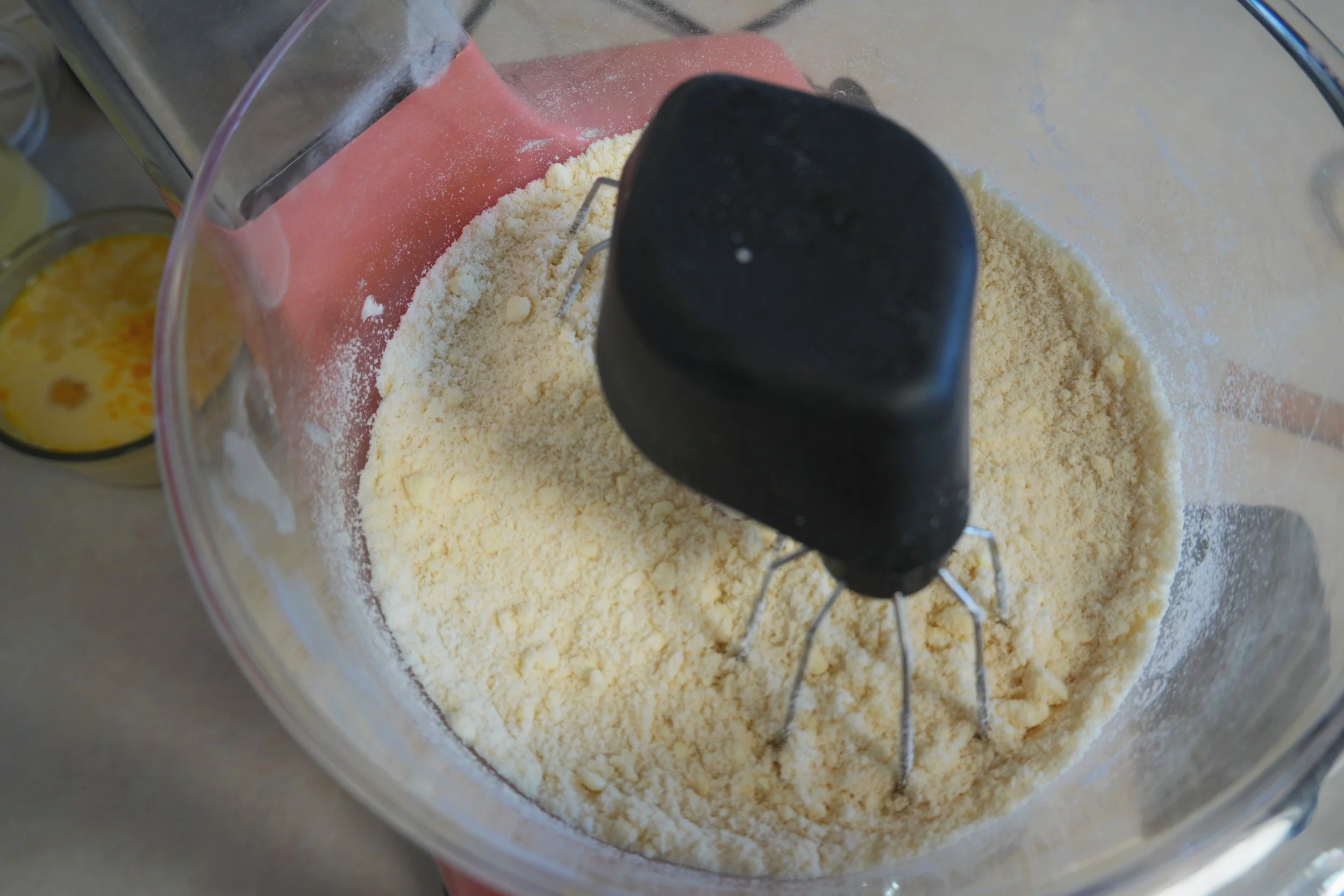
Step 4: Slowly add chunks of your room temperature Butter into the mixer on slow speed until it is all added, then let it mix until it looks like coarse sand. Scrape the bowl here as needed.
Step 5: Add your Milk/Oil mixture all at once to the dry ingredients and mix on medium for 2 minutes to develop the structure. This step is important for mixing out the hard lumps of flour so don’t skimp on the time! Scrape the bowl when done.
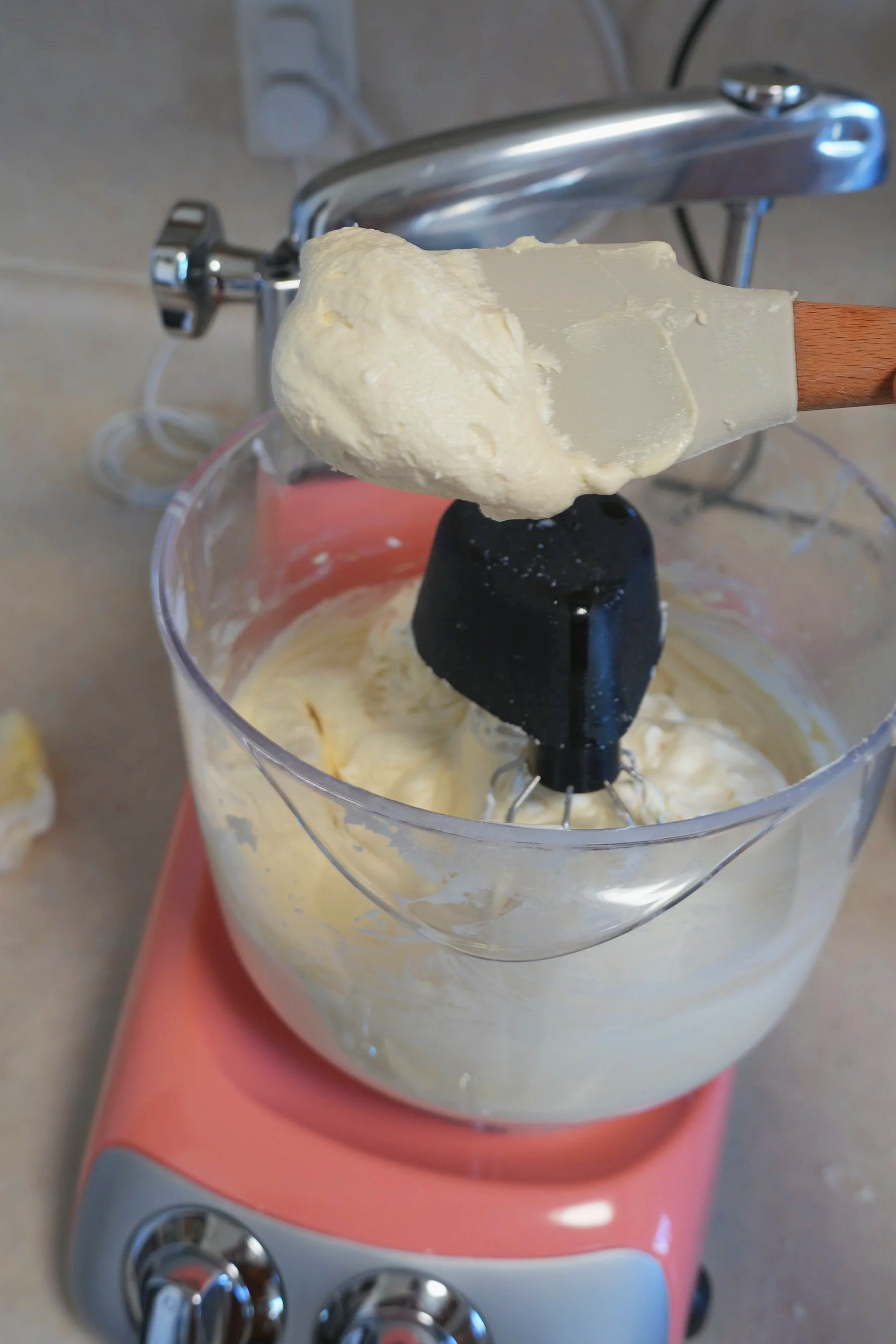
Step 6: Slowly add in the Milk/Egg mixture while mixing on low, stopping to scrape the bowl once more halfway through. Mix until just combined. Your batter should be thick and not too runny.
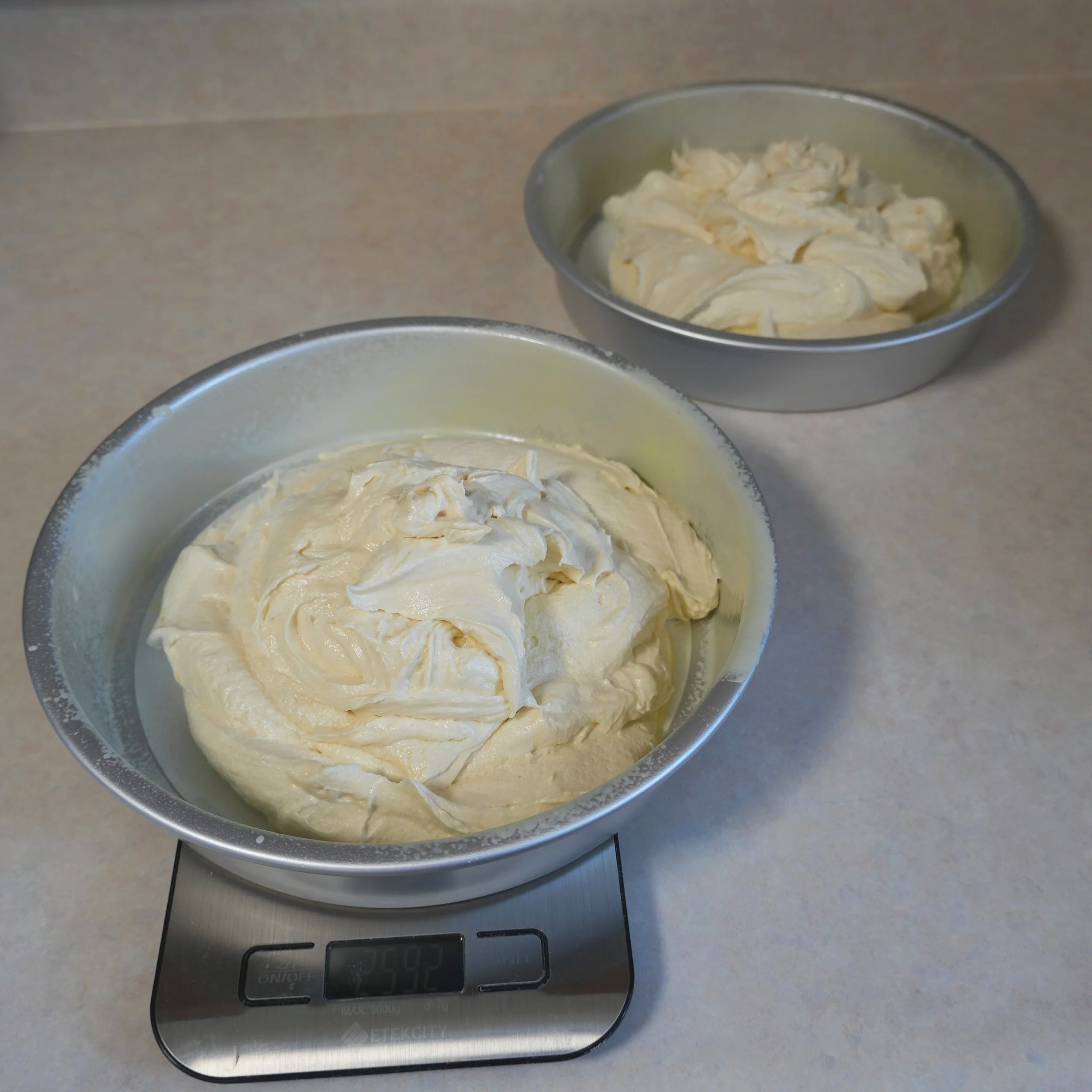
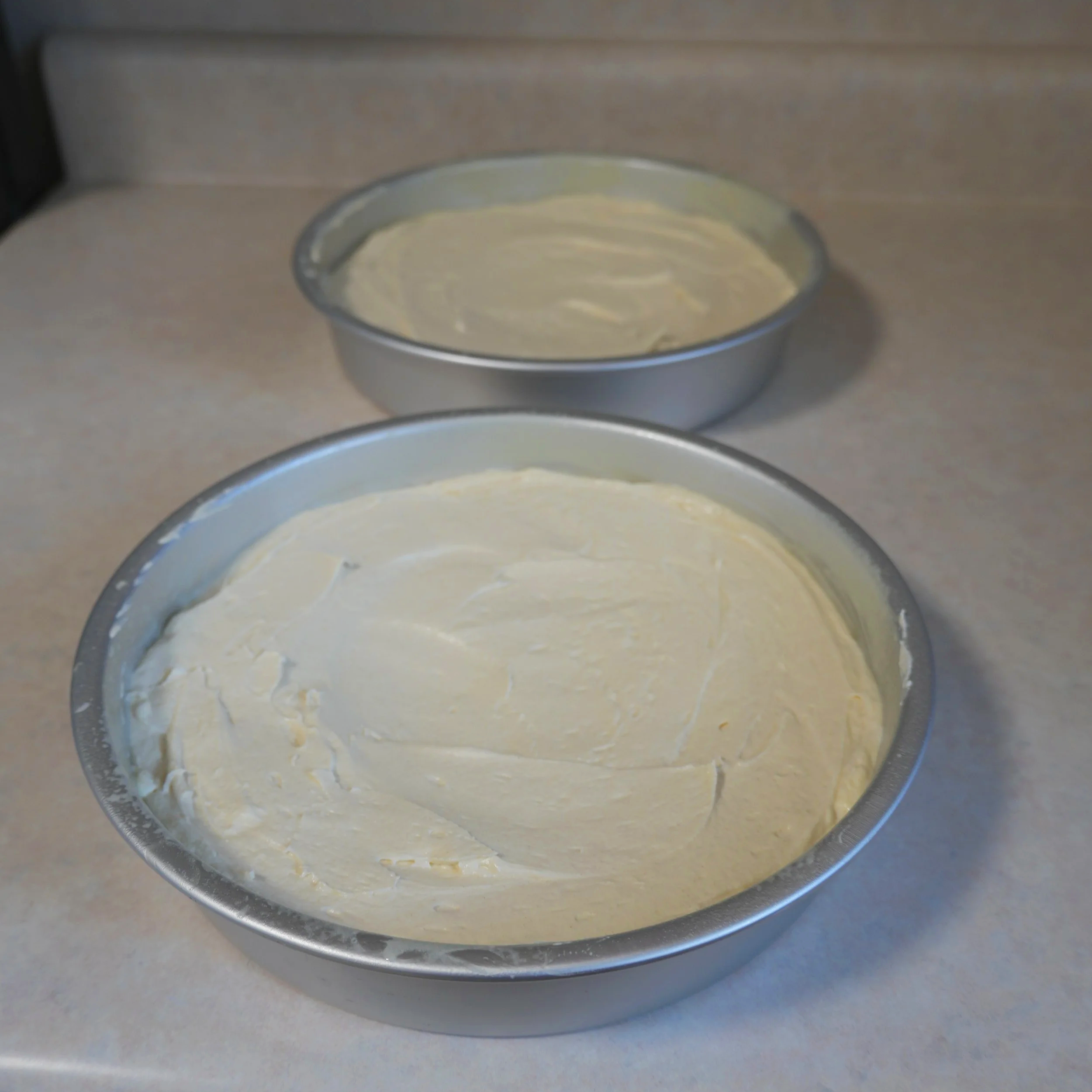
Step 7: Divide the batter evenly into your prepared cake pans using a scale. Spread out the batter and create a shallow dimple in the middle to avoid a domed cake.
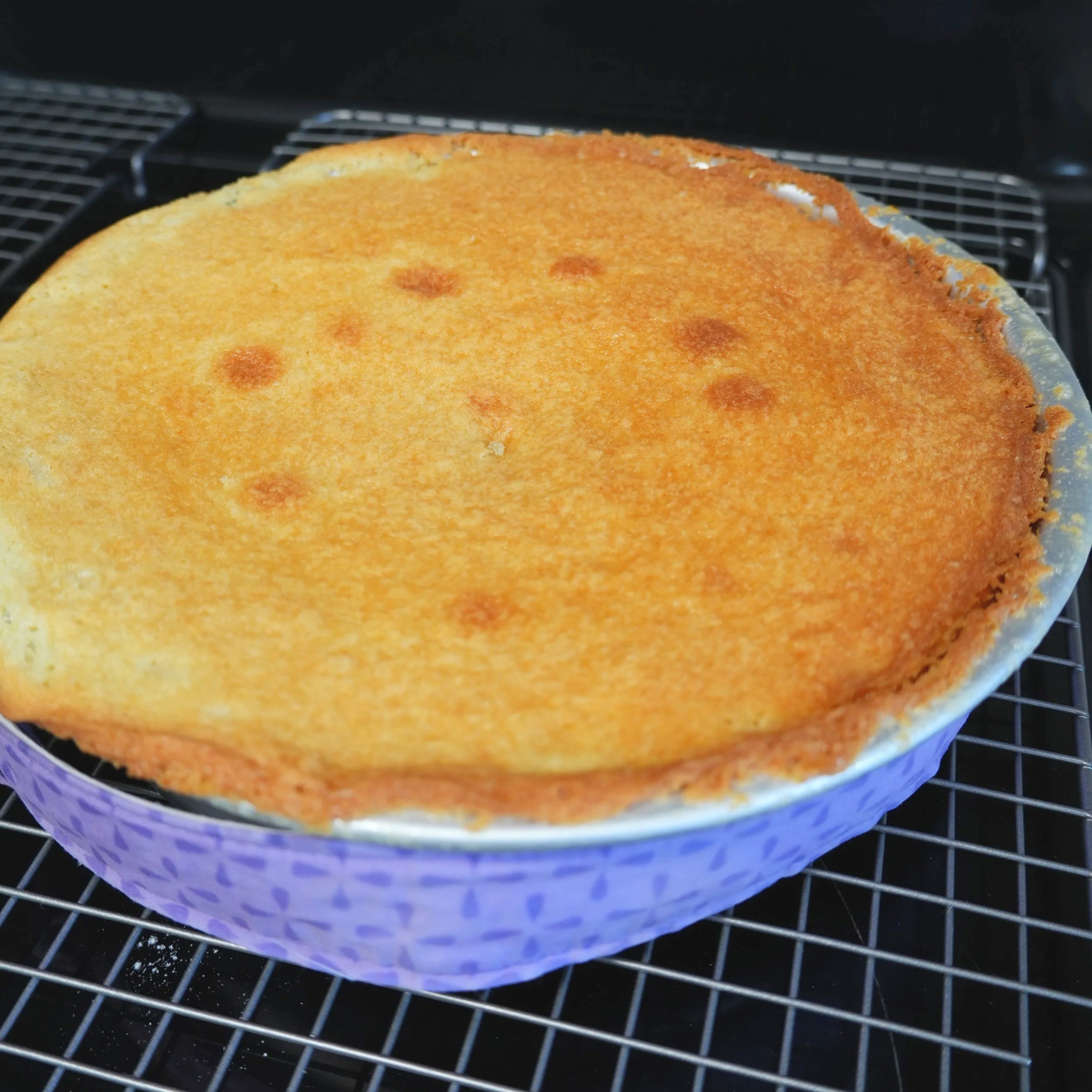
Step 8: Add wet/damp cake strips to the cake pans and place in preheated oven to bake for 30 minutes. Avoid opening the oven until they appear to be ready. Check them by inserting a toothpick and seeing if it comes out clean. Gently touch the top of the cake, feeling for a spring back. Oven temperatures vary so if it's not done yet, bake for a few more minutes (2-3) and check again.
Step 9: Remove the cakes from the oven and let them cool on a cooling rack until they are barely warm.
Step 10: After cooling for about 15-20 minutes, remove cakes from pans, wrap gently in plastic wrap and move to refrigerator or freezer to chill completely. This makes them easier to handle when stacking.
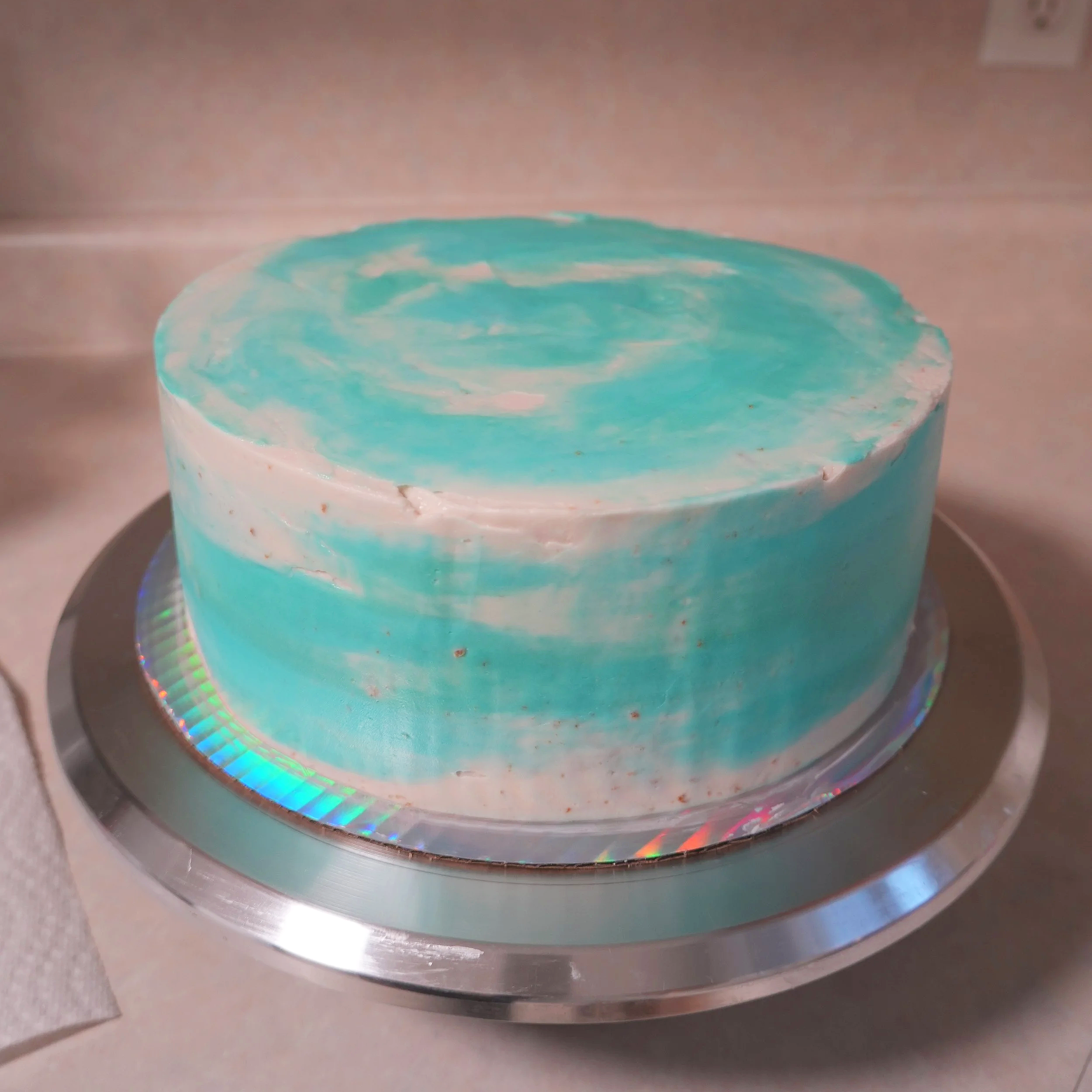
For the best frosting pairing, use my Classic Vanilla Buttercream Recipe! It’s light, airy, silky smooth, and just the right amount of sweet to compliment this divine vanilla flavor.